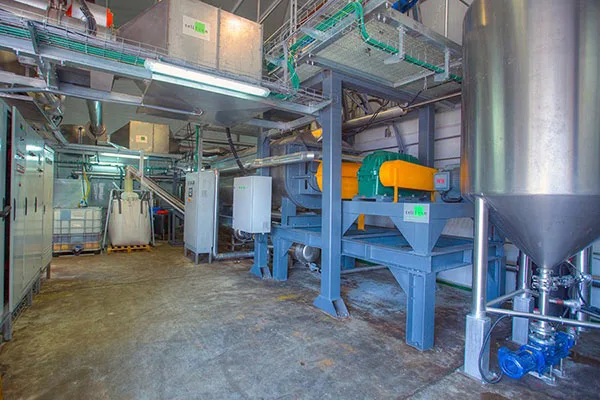
Blood from slaughterhouse operations requires careful process planning. Its volume, consistency, handling conditions, and intended use all influence whether it should be processed separately or combined with other animal by-product streams. WALDT helps companies evaluate the right approach as part of an integrated animal by-product processing solution.
Blood waste management means defining how slaughterhouse blood should be collected, handled, pre-treated, processed, or combined with other by-products within the wider rendering process. Standalone blood processing is generally relevant only at higher daily volumes, typically around 10–20 tonnes per day. Below this range, it is advisable to consider co-processing with feathers, offal, or other suitable animal by-product streams.
Blood can influence the performance of the entire processing line. Its moisture content, protein value, handling requirements, and storage conditions can compromise process stability, energy consumption, product quality, and odour management.
A well-designed blood handling strategy helps organizations avoid process imbalance and define a more reliable route for creating usable outputs from mixed by-product streams.
We start by understanding the blood stream and its role in the full by-product process.
A Technology Study can define the technical and commercial basis for the chosen processing route.
WALDT helps connect blood handling with the wider rendering process.
We support the project from concept to industrial operation.